KILA
The Heritage Palace

Geneology

The House of Kothi: A Legacy Through Generations
A detailed chronicle of the rulers who shaped Kothi’s noble past and continue its traditions into the present.

Rais DUNIYAPATI SINGH
Rais of Kothi fl.1810, married and had issue.
Rais Abdhut Singh (qv)
Rais ABDHUT SINGH
Rais of Kothi, married and had issue.
Rao Ran Bahadur Singh (qv)
Rais RAN BAHADUR SINGH
Raja of Kothi 1862/1887, born 1829, he was granted the title of Raja Bahadur as a hereditary distinction on 1st January 1878 in recognition of his loyalty, public spirit, and benevolence; married and had issue. He died 5th June 1887.
Raja Bahadur Bhagwat Bahadur Singh (qv)
Raja Bahadur BHAGWAT BAHADUR SINGH
Raja of Kothi 1887/1895, born 1852, he succeded to the gadi on 5th June 1887, married only daughter of the Kanhpuria Raja of Jamon in Sultanpur District. She had issue three sons out of which younger two were adopted to Jamon but died one by one. Lastly the eldest son succeeded to Kothi and Jamon both.
Raja Bahadur AVADHENDRA SINGH
Raja of Kothi 1895/1914
Raja Bahadur Kaushalendra Pratap Singh (qv)Umaraman Pratap Singh, born 1936, succeeded to Jamon.Tej Pratap Singh
Sitaram Pratap Bahadur Singh
Raja of Kothi 1914/1934
Raja Bahadur KAUSHALENDRA PRATAP SINGH
Raja of Kothi 1934/-, born 1912, married to a daughter of Raja Narendra Bahadur Pal of Mahson in Basti district of U.P., and had issue.
Raja Bahadur GOVIND PRATAP SINGH
Raja of Kothi fl.1970. Married to Ranisaheb Jaswant Kumari of Mandwa. He died on 11th January 2017.
Raja Bahadur Ghanshyan Singh Judeo (qv)Raja Bahadur Aditya Pratap Singh Judeo.Rajkumar Rajvardhan Singh Judeo
Raja Bahadur GHANSHYAM SINGH JUDEO
Present Raja of Kothi, married to Ranisaheba Savitri Singh of Thikana Ganshipur (Allahabad) and has issues, one son and 2 daughters.
Yuvraj Harshvardhan Singh (qv)Harshita Singh, married to Yuvraj Jay Mardaraj of Nilgiri (Odisha).Sanyogita Singh, Entrepreneur.
Raja Bahadur HARSHVARDHAN SINGH JUDEO
Lineage
The Rajput Kshatriya Lineages
Rajputs are historically classified as one of the Kshatriya (warrior and ruling) classes, tracing their ancestry through 36 major royal clans mentioned in sacred texts like the Puranas and epics (Mahabharata and Ramayana). These clans are organized into three fundamental lineages, known as Vanshas or Vamshas
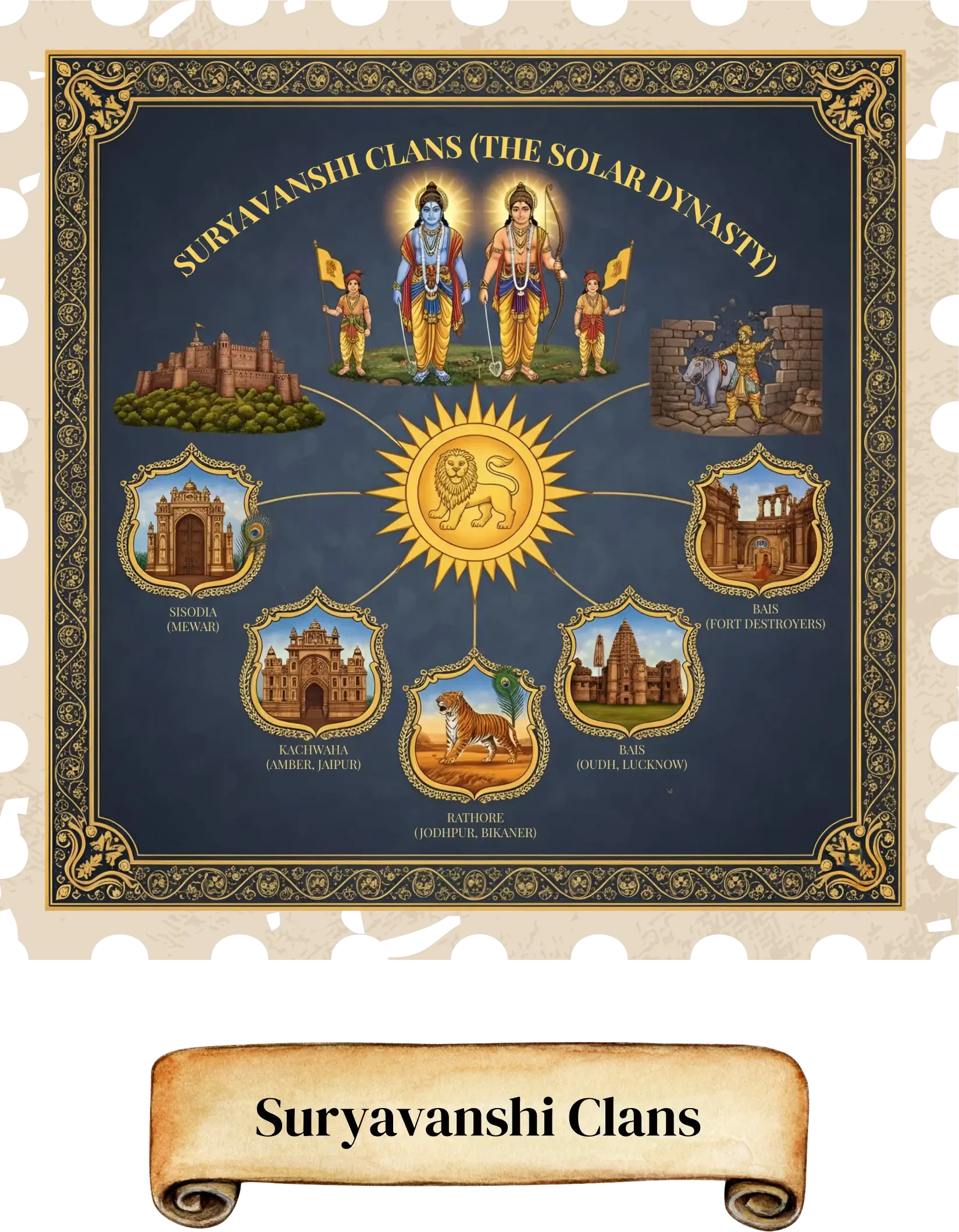
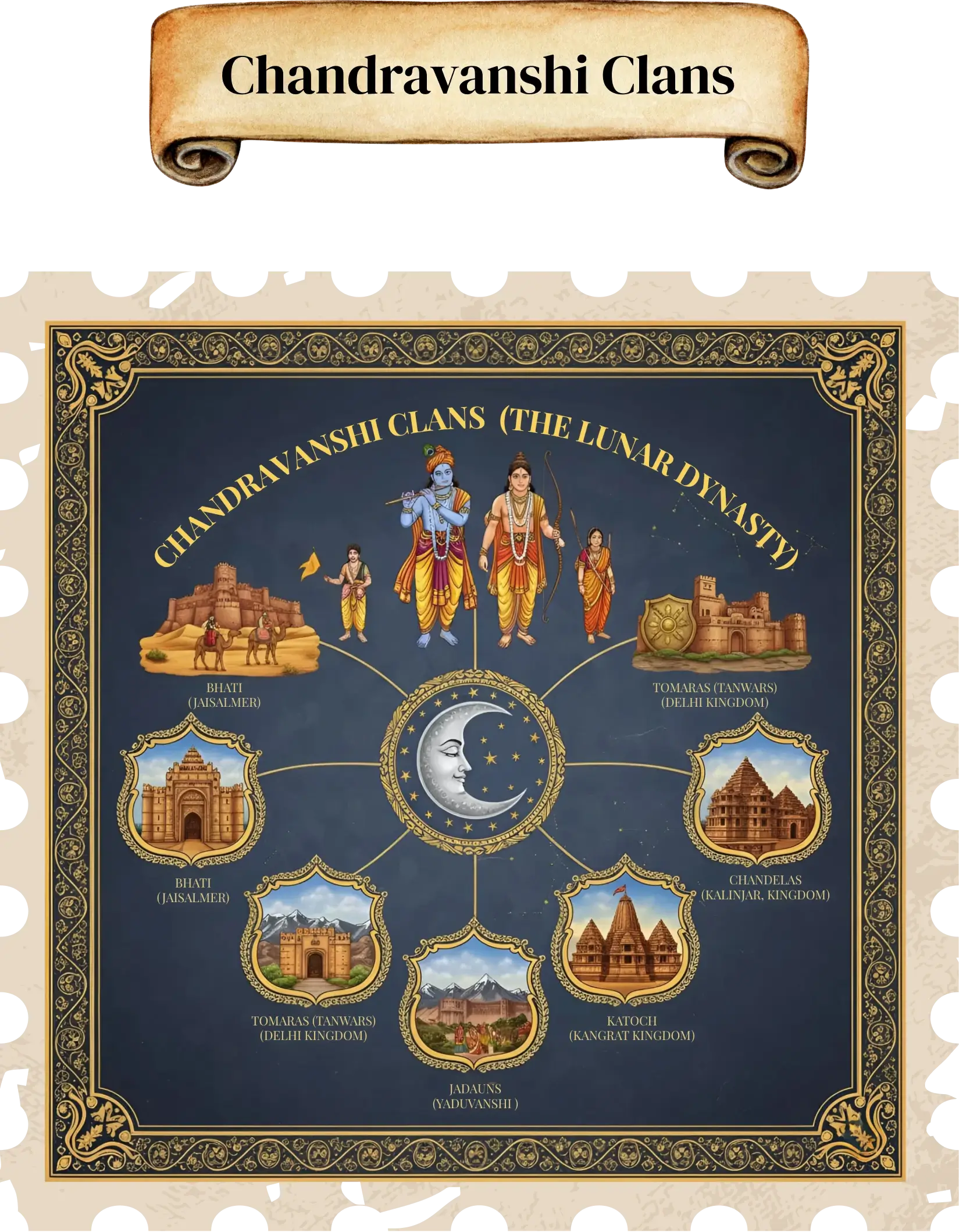
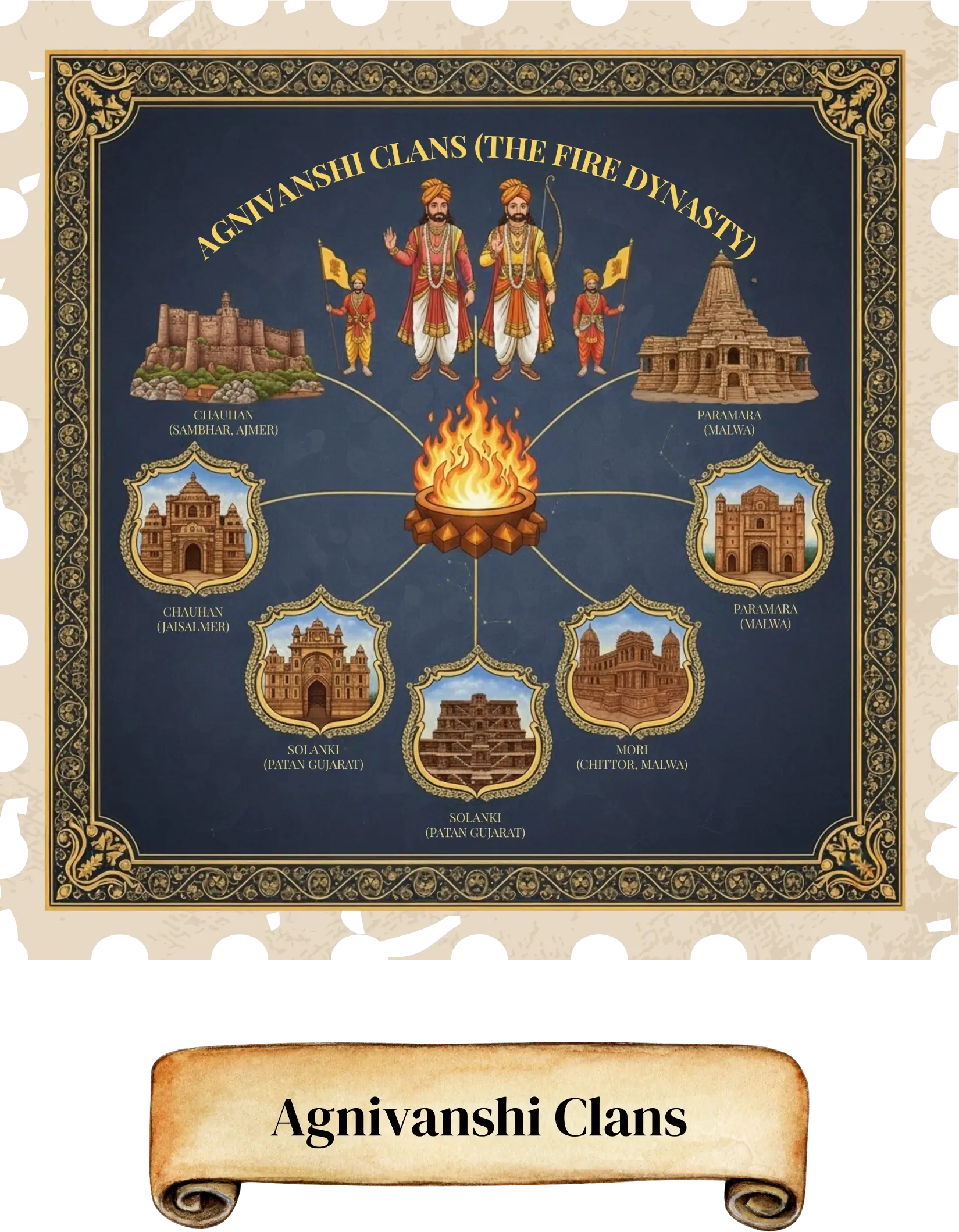
Suryavanshi Clans (The Solar Dynasty)
The Suryavanshi lineage is the most ancient and revered, tracing its origins directly to the Sun God. This dynasty flows through the mythical kings of Ayodhya, including Ikshvaku, Raghu, and the epic hero Lord Rama. Clans like the Sisodia of Mewar and the Kachwaha of Jaipur carry forward this heritage of dharma and valor, representing a history that is both foundational and enduring in Indian royalty
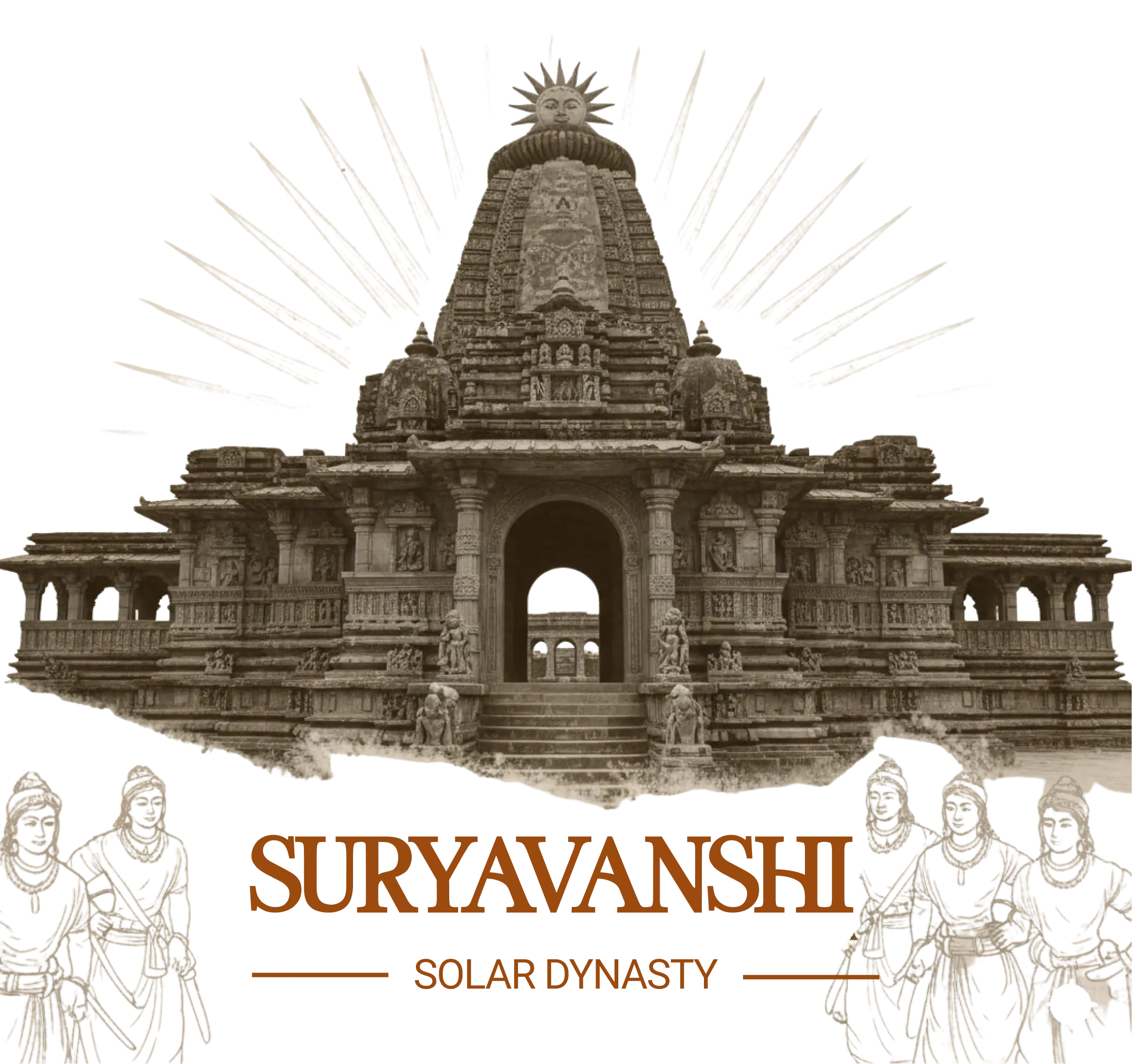
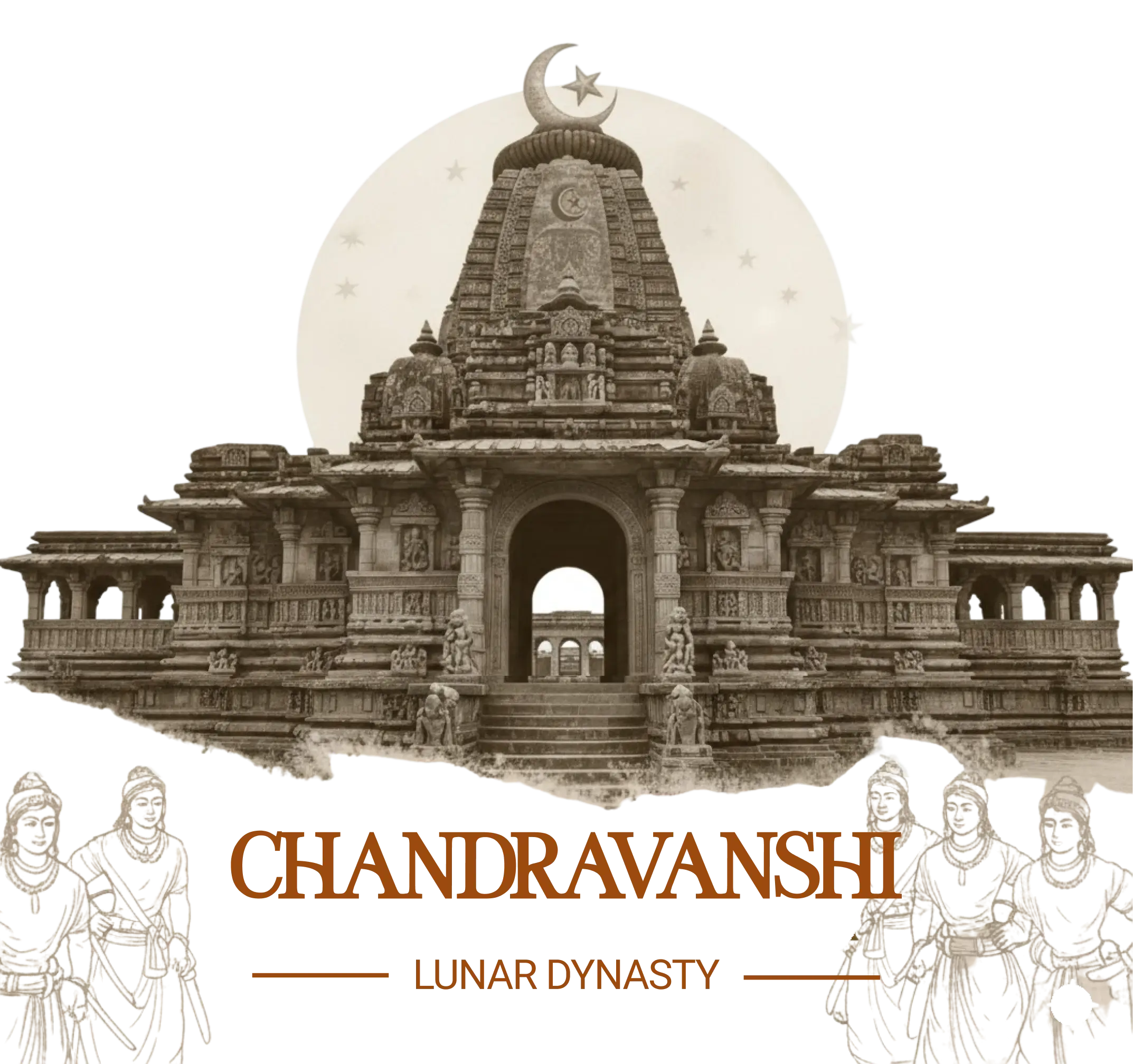
Chandravanshi (The Lunar Dynasty)
Claiming descent from the Moon God (Soma),the Chandravanshi lineage is deeply woven into the fabric of the Mahabharata. Its branches include the Puruvanshi (ancestors of the Kauravas and Pandavas) and the Yaduvanshi, to which Lord Krishna belonged. Clans such as the Bhati of Jaisalmer and the Tomaras of Delhi proudly uphold this powerful history, symbolizing courage and great political influence.
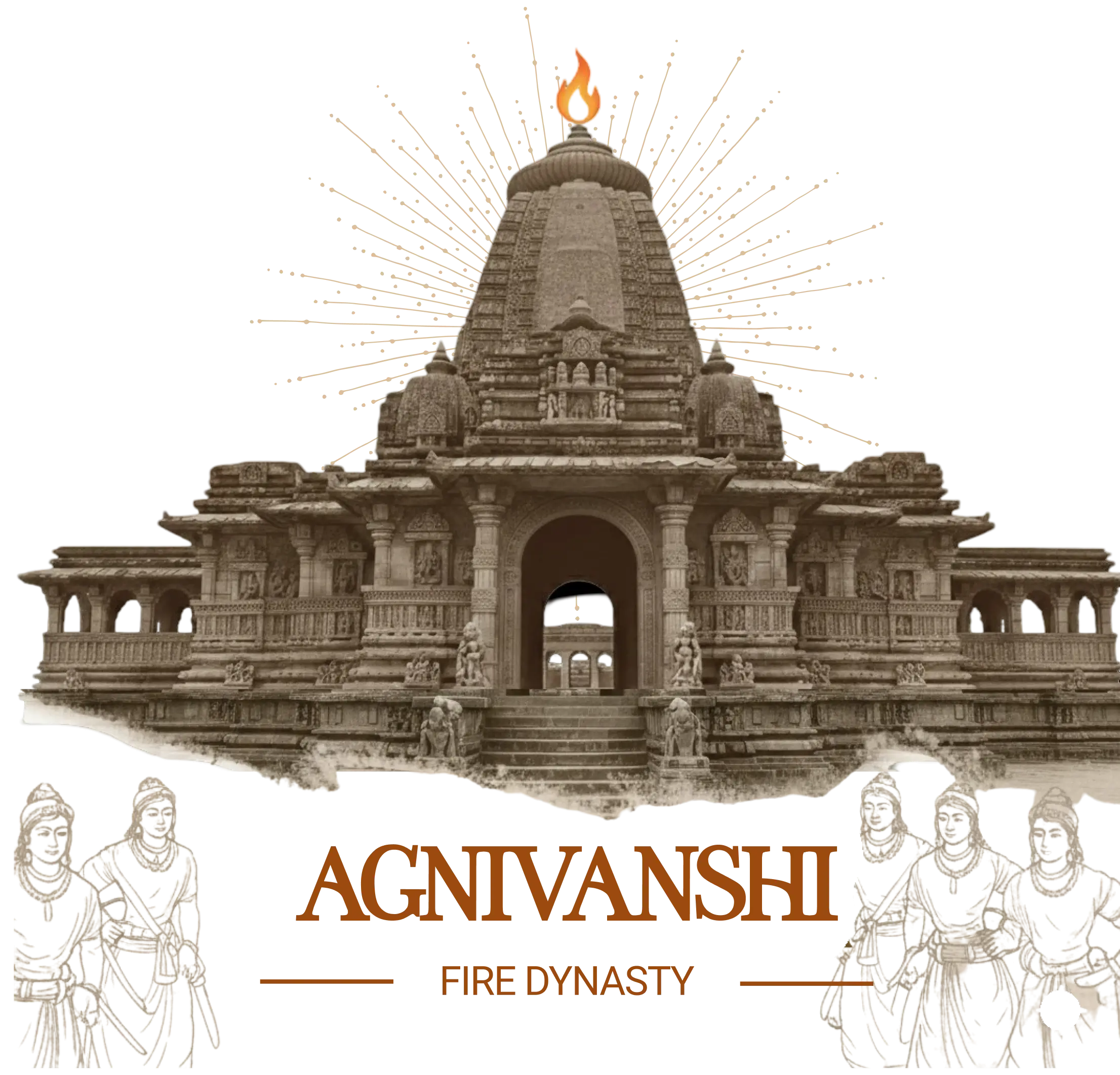
Agnivanshi (The Fire Dynasty)
The Agnivanshi lineage stands apart, claiming its descent from a sacrificial fire pit (Agnipala), symbolizing purification and renewed martial vigor. This dynasty includes four major clans that significantly shaped the history of Central and Western India: the Chauhan, Parmara, and Solanki. Their rise to prominence often occurred in the wake of other empires, making them figures of great resilience and strategic power.
Stay connected
Receive updates about our royal experiences and heritage insights